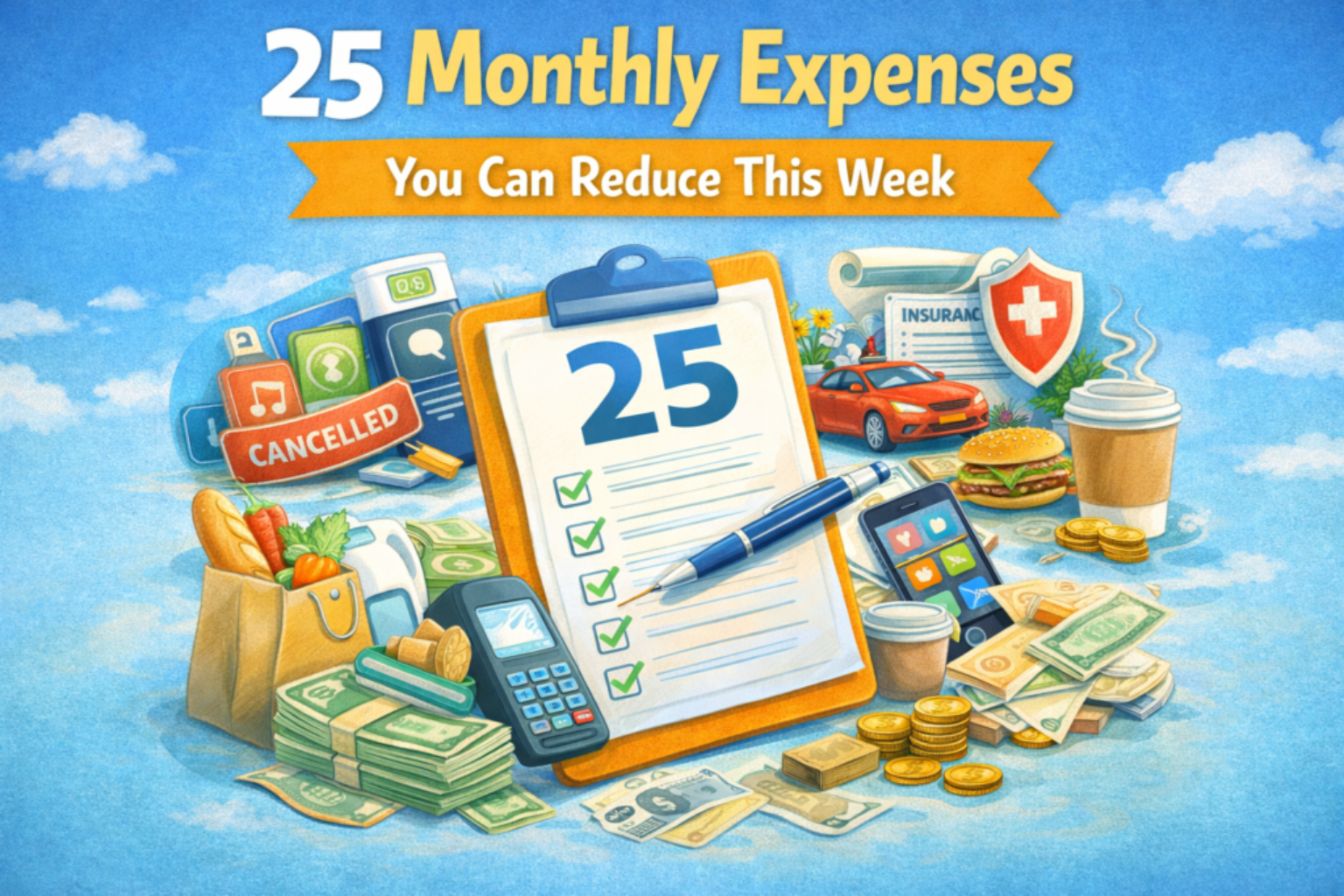
25 Monthly Expenses You Can Reduce This Week
If your budget feels tight every month, the fastest place to look is usually your recurring expenses. One-time savings help once. Monthly savings help again and again. The CFPB recommends reviewing your real spending over several months and making sure you include not only regular bills, but also utilities, insurance, and less-frequent costs that still affect your monthly cash flow.
This list is built for real households, not extreme frugality. You do not need to cut everything. You just need to identify the bills and habits that are quietly draining cash without adding enough value.
Start with recurring charges first
Before you try to save more money, review:
- checking-account transactions
- credit-card statements
- autopays
- subscription renewals
- utility bills
- insurance premiums
The CFPB says looking at your actual transactions is one of the best ways to understand what you are really spending and where changes are possible.
25 monthly expenses you can reduce this week
1. Unused streaming subscriptions
If you are paying for more than one or two platforms and barely using them, cancel at least one.
2. App subscriptions
Many people pay monthly for editing apps, fitness apps, storage tools, or AI tools they no longer use enough.
3. Music or audiobook duplicates
If your household is paying for overlapping entertainment subscriptions, pick the one you use most.
4. Cloud storage you outgrew
Review whether you really need the paid tier or whether a lower tier works.
5. Premium phone plan add-ons
Many carrier extras sound useful but add up fast across a year.
6. Extra phone lines you no longer need
Family plans often keep inactive or lightly used lines longer than necessary.
7. Internet speed that is higher than your actual usage
The FCC’s National Broadband Map lets you search your address and compare providers, speeds, and technologies available near you, which can help you decide whether you are overpaying or whether a cheaper provider is available.
8. Router or equipment rental fees
Buying your own compatible equipment can sometimes reduce a recurring monthly charge.
9. Electricity waste from always-on electronics
The Department of Energy says you can reduce costs by cutting electricity waste from appliances and electronics, including “vampire loads” from devices that draw power when not in use.
10. Heating and cooling costs
The DOE says properly insulating, air sealing, and using systems efficiently can lower household electricity use and cost.
11. Water-heating costs
The DOE says water heating is one of the biggest energy expenses in many homes and suggests reducing hot-water waste, fixing leaks, and using efficient fixtures and appliances.
12. Extra lighting and appliance use
Shifting habits around lighting, laundry, dishwashing, and appliance use can trim monthly utility costs over time. The DOE’s consumer guidance specifically points to lighting and appliance efficiency as places households can save.
13. Auto insurance premium
Review your policy before renewal and compare options. This is often one of the largest monthly bills outside housing.
14. Renters or homeowners insurance extras
Some households are paying for coverage add-ons they do not really need.
15. Grocery overspending
Food is one of the easiest areas to adjust because small weekly improvements show up quickly in the monthly total. If groceries are a big line item, our guide on how to lower your grocery spending without extreme couponing breaks down practical ways to trim the bill.
16. Convenience-store purchases
These small repeat purchases are easy to overlook and often cost much more than grocery-store equivalents.
17. Takeout frequency
Cutting takeout by even one or two meals a week can make a visible difference by the end of the month.
18. Coffee and drink purchases
Daily drink habits are one of the classic “small leaks” that quietly become a monthly bill.
19. Delivery fees and service charges
Even when the meal cost seems reasonable, repeated delivery fees can inflate food spending fast.
20. Gym membership you barely use
If you are not going, pause it, cancel it, or switch to a cheaper option you will actually use.
21. Monthly subscription boxes
These are easy to forget because they feel small and automatic, but they are often low-priority spending.
22. Bank account fees
If you are paying monthly maintenance fees, overdraft fees, or similar charges, those are direct hits to your budget. The CFPB says overdrafts and other bank fees can cost consumers money quickly, which is why monitoring recurring account charges matters.
23. Credit-card interest from revolving balances
This is not a “bill” you can cancel, but it is a recurring cost you can reduce by paying down expensive balances faster.
24. Parking, tolls, or commuting extras
Look for repeated transportation costs that could be reduced with route, habit, or scheduling changes.
25. Forgotten subscriptions that are hard to cancel
The FTC warns consumers to monitor statements, cancel unwanted subscriptions directly, and dispute charges if companies keep billing after cancellation.
Which expenses should you cut first?
Do not start with the biggest bill if it is complicated. Start with the easiest wins:
- unused subscriptions
- duplicate digital services
- food-delivery leakage
- phone/internet overpaying
- utility waste
- insurance review
This works because quick wins build momentum and free up cash without making your life miserable.
A simple rule for choosing what to cut
Keep asking:
- Do I use this enough?
- Is there a cheaper version?
- Is this solving a real problem?
- Would I sign up for this again today?
If the answer is no, that expense deserves attention.
Final answer
The best monthly expenses to reduce this week are the ones that are:
- recurring
- easy to change
- low-value
- overpriced
- forgotten
The CFPB’s budgeting advice supports reviewing real transactions and accounting for all the bills and irregular costs that affect your monthly life. DOE guidance shows that utilities can often be reduced through efficiency, and FCC tools can help consumers compare internet options at their exact address.
The goal is not to become extreme. The goal is to stop paying for things that no longer deserve space in your budget.
FAQ
What monthly expense should I cut first?
Usually subscriptions or recurring services you barely use, because they are often the fastest and easiest wins.
How can I lower my internet bill?
Use the FCC National Broadband Map to compare what providers and speeds are available at your address before renewing or switching plans.
Can utility bills really be lowered without major upgrades?
Yes. The DOE says households can reduce electricity costs through more efficient use of appliances, lighting, heating, cooling, and hot water.
What should I do about subscriptions that keep charging me?
The FTC says to contact the company, keep records of your cancellation, watch your statements, and dispute charges if billing continues after cancellation.
Why does my budget still feel tight even after a few cuts?
Because many budgets miss less-frequent but still important expenses like insurance, medical costs, and seasonal spending. The CFPB specifically tells consumers to include those when assessing spending.