3 or 6 Month Emergency Fund: Which Rule Fits You?
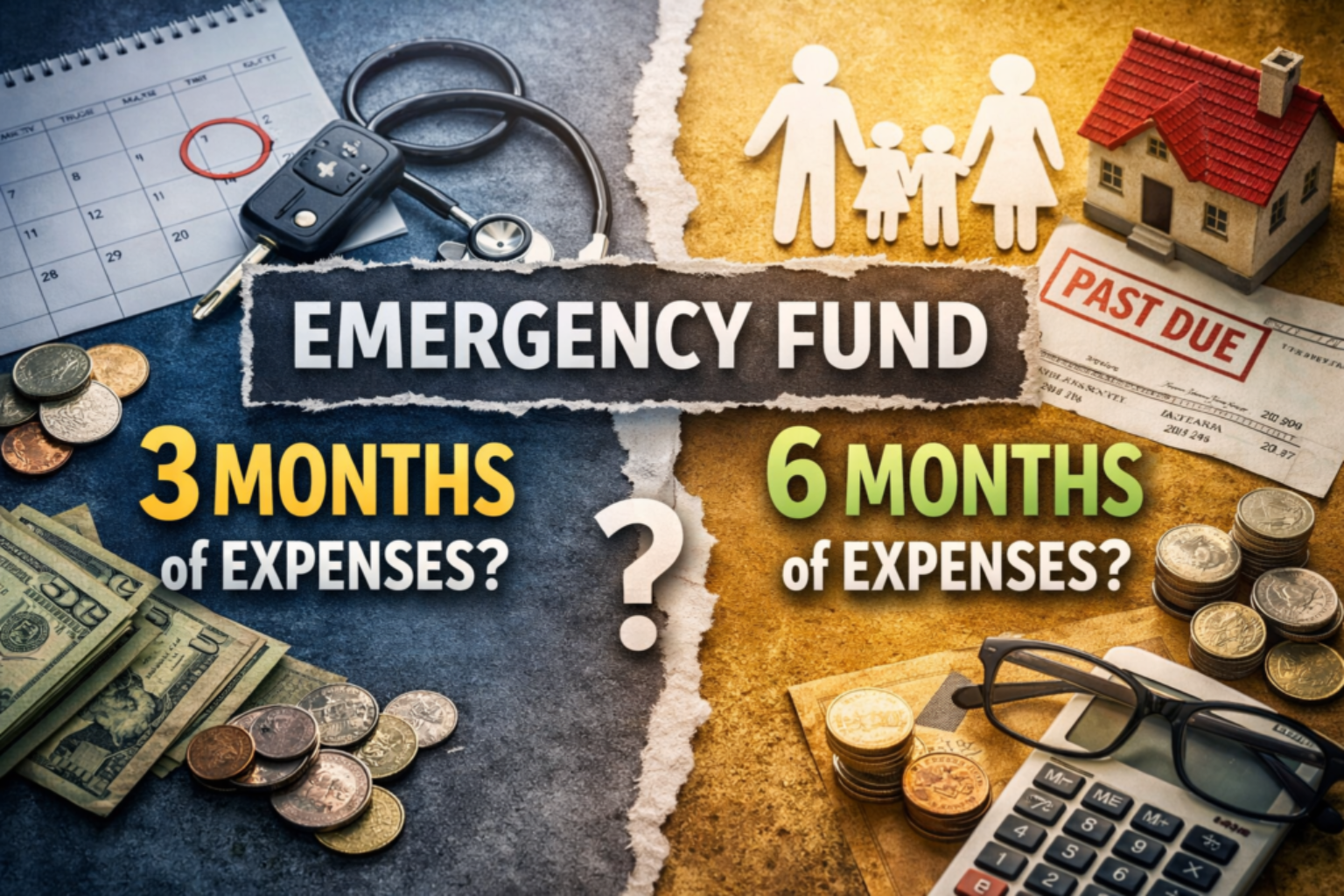
If you have ever wondered whether you should keep a 3 or 6 month emergency fund, saving 3 months or 6 months of expenses, you are asking the right question. There is no single emergency-fund rule that fits every household. The Consumer Financial Protection Bureau says the amount you need depends on your situation and the kinds of unexpected costs you are most likely to face. It also notes that even a small amount of emergency savings can provide some financial security.
That is why the usual advice to save “three to six months” is only a starting point. For some people, three months of essential expenses is a solid target. For others, six months is the more realistic safety net, especially if income is unpredictable or several people depend on one paycheck. Federal Reserve data shows that in 2024, only 55% of U.S. adults said they had rainy-day funds to cover three months of expenses, which is a reminder that even reaching the three-month mark is a meaningful milestone.
Why this decision matters
Choosing the right emergency-fund target matters because emergencies do not all look the same. A short medical bill, car repair, or temporary cash-flow squeeze is one kind of problem. A layoff, long job search, or major income drop is another. The CFPB says an emergency fund is meant for unplanned expenses or financial emergencies such as car repairs, home repairs, medical bills, or a loss of income.
The difference between a three-month fund and a six-month fund is not just a bigger number on paper. It changes how much flexibility your household has when life gets expensive. CFPB guidance on job loss also notes that unemployment benefits rarely replace all of your income, which means households often need more than a partial benefit check to stay stable during a disruption.
When 3 months of expenses may be enough
For many households, three months of essential expenses is a strong and reasonable target. It may fit you well if your income is steady, your fixed costs are manageable, and your household has more than one source of income.
Three months may make sense if:
- you have a stable full-time job
- your industry is relatively steady
- you live in a dual-income household
- your monthly essentials are controlled
- you are still balancing saving with other goals like debt payoff
This is not about being optimistic. It is about matching your savings to your actual risk. If your income is dependable and your household could still function if one expense hit at the wrong time, three months may be enough to cover the most likely disruptions. The CFPB’s guidance supports tailoring your goal to your own history of unexpected expenses and your current situation, rather than copying a generic number blindly.
When 6 months of expenses may be the better choice
For other households, six months of essential expenses is the smarter target. This is especially true when your income is less predictable or your household has less room for error.
Six months may fit better if:
- you are self-employed or freelance
- your income changes from month to month
- you work in a cyclical or layoff-prone industry
- you are the sole earner in your household
- you support children or other dependents
- your fixed costs are high
- it may take longer to replace your income
Current BLS data helps explain why six months can be a sensible goal for some workers. In February 2026, the median duration of unemployment was 11.1 weeks, and 41.4% of unemployed people had been unemployed for 15 weeks or more. That means a substantial share of job seekers were already beyond the three-month range.
That does not mean everyone needs six months. It means that if your job search could realistically take longer, or your income is harder to replace, then a larger buffer gives you better odds of avoiding debt, missed bills, or rushed financial decisions.
How job stability changes the answer
The most important factor in the 3 months vs 6 months emergency fund decision is usually income stability.
If you have a predictable paycheck, strong job security, and possibly a second earner in the household, the risk of a long income gap is lower. In that case, three months of essentials may be a strong target.
But if your income is seasonal, commission-based, contract-based, or self-employed, your emergency fund has to do more than absorb surprise bills. It also has to smooth out income gaps. That is why variable-income households often need a larger cash cushion. The CFPB’s emergency-fund guidance says to think about the unexpected expenses you have had in the past and use that to shape your target. For many variable-income households, one of those “unexpected expenses” is simply a period of lower earnings.
A practical way to think about it is this:
- very stable income: start with 3 months
- moderately uncertain income: build toward 3 to 6 months
- highly irregular income: 6 months may be the more realistic goal
Family size and financial responsibilities matter too
The right emergency-fund rule also depends on how many people rely on your income and how expensive your essential life is.
A single renter with low fixed costs may be able to operate with a smaller emergency fund for a while. A household with children, childcare costs, health expenses, and one main earner faces a different reality. The more people depending on your paycheck, the more valuable extra cash buffer becomes.
Federal Reserve data also shows that parents living with their own children under 18 were less likely than other adults to report having three months of emergency savings in 2024. That gap helps show how much harder it can be for families to build a buffer, even though they often need one badly.
You should lean closer to six months if:
- losing income would affect several people, not just you
- replacing childcare, transportation, or medical spending would be difficult
- your household could not easily cut back fast enough during an emergency
- you do not have family support or backup help nearby
Use essential expenses, not full lifestyle spending
Whichever rule you choose, the number should be based on essential monthly expenses, not your full spending.
That usually includes:
- housing
- utilities
- groceries
- insurance
- transportation
- minimum debt payments
- childcare
- essential medical costs
It usually does not include:
- vacations
- dining out
- optional subscriptions
- shopping
- entertainment upgrades
This matters because a three-month or six-month target becomes much more realistic when it is based on what your household actually must keep paying during an emergency.
A simple way to decide between 3 and 6 months
Use this decision shortcut:
Choose 3 months if most of these are true
- your paycheck is stable
- your household has two earners
- your job is relatively secure
- your monthly essentials are moderate
- you could cut spending quickly if needed
Choose 6 months if most of these are true
- your income is variable
- you are self-employed or freelance
- you support a family on one income
- your monthly essentials are high
- your industry is volatile
- replacing your income could take time
If you are in the middle, do not overcomplicate it. Build toward three months first, then decide whether your real-life risk justifies growing it toward six.
What if 6 months feels impossible?
Then do not start with six.
The CFPB is very clear that even a small amount of savings can help. If six months feels too big, build in layers:
- save your first $500 to $1,000
- build to one month of essential expenses
- grow to three months
- then decide whether six months is worth pursuing for your household
This is the smartest way to avoid getting discouraged. A household with one month of expenses saved is in a much stronger position than a household waiting for the perfect time to save six.
Final answer: which emergency fund rule fits you?
For many households, three months of essential expenses is a strong baseline emergency fund. It is a realistic target that can cover many common financial shocks and gives you meaningful breathing room. Federal Reserve data uses three months as a key benchmark for household resilience, which is one reason it is such a widely used rule.
But six months of essential expenses may be the better target if your income is irregular, your job is less secure, your household depends on one paycheck, or your fixed costs are high. Current BLS unemployment-duration data shows that many job searches extend well past the three-month range, which is exactly why some households need a larger margin of safety.
So the best answer is not “everyone needs six months” or “three months is always enough.” The best answer is this:
Choose the emergency-fund size that matches how long your household could realistically be under pressure.
FAQ
Is 3 months of expenses enough for an emergency fund?
It can be enough for households with stable income, lower fixed costs, and less risk of a long disruption. It is a strong target for many people, but not for everyone.
Is 6 months too much?
Not necessarily. Six months can be appropriate if your income is variable, you are self-employed, or several people rely on one paycheck.
Should I save 3 months or 6 months if I am single?
It depends more on your income stability and fixed expenses than your relationship status alone. A single person with very stable work may be fine with three months. A single freelancer may need six.
What if I cannot get to 3 months yet?
Start smaller. The CFPB says even a small amount of savings can improve financial security. Build in steps instead of waiting for the perfect number.
Should I calculate the fund using income or expenses?
Use essential monthly expenses. Your emergency fund is there to cover what you must keep paying if income drops.