How to Cut Monthly Bills Without Making Life Miserable
Cutting monthly bills does not have to mean turning your life into a punishment routine. The best approach is not to slash everything at once. It is to identify the recurring costs that are high, wasteful, or outdated, then reduce them in a way you can actually maintain. The CFPB says a realistic budget should include not just your monthly payment obligations, but also utilities, maintenance, repairs, insurance, and less-frequent expenses that still affect cash flow.
That matters because many people are not really dealing with a “spending problem.” They are dealing with a systems problem: too many recurring charges, plans that no longer fit, and bills that have drifted higher over time. The fastest wins usually come from recurring expenses because every reduction keeps paying you back month after month.
Start with recurring expenses first
If you want to lower your monthly bills, start with the charges that repeat automatically:
- housing-related costs you can influence
- utilities
- internet and phone
- insurance
- subscriptions
- recurring debt payments
The CFPB says one of the best ways to understand what you can afford is to look closely at your checking-account and credit-card history over several months and build a budget that reflects your actual spending, not what you think it “should” be. It also says to look back far enough that you do not miss less-frequent costs like insurance, medical expenses, gifts, seasonal costs, and other irregular items.
That is why your first step should be a bill audit, not random cutting.
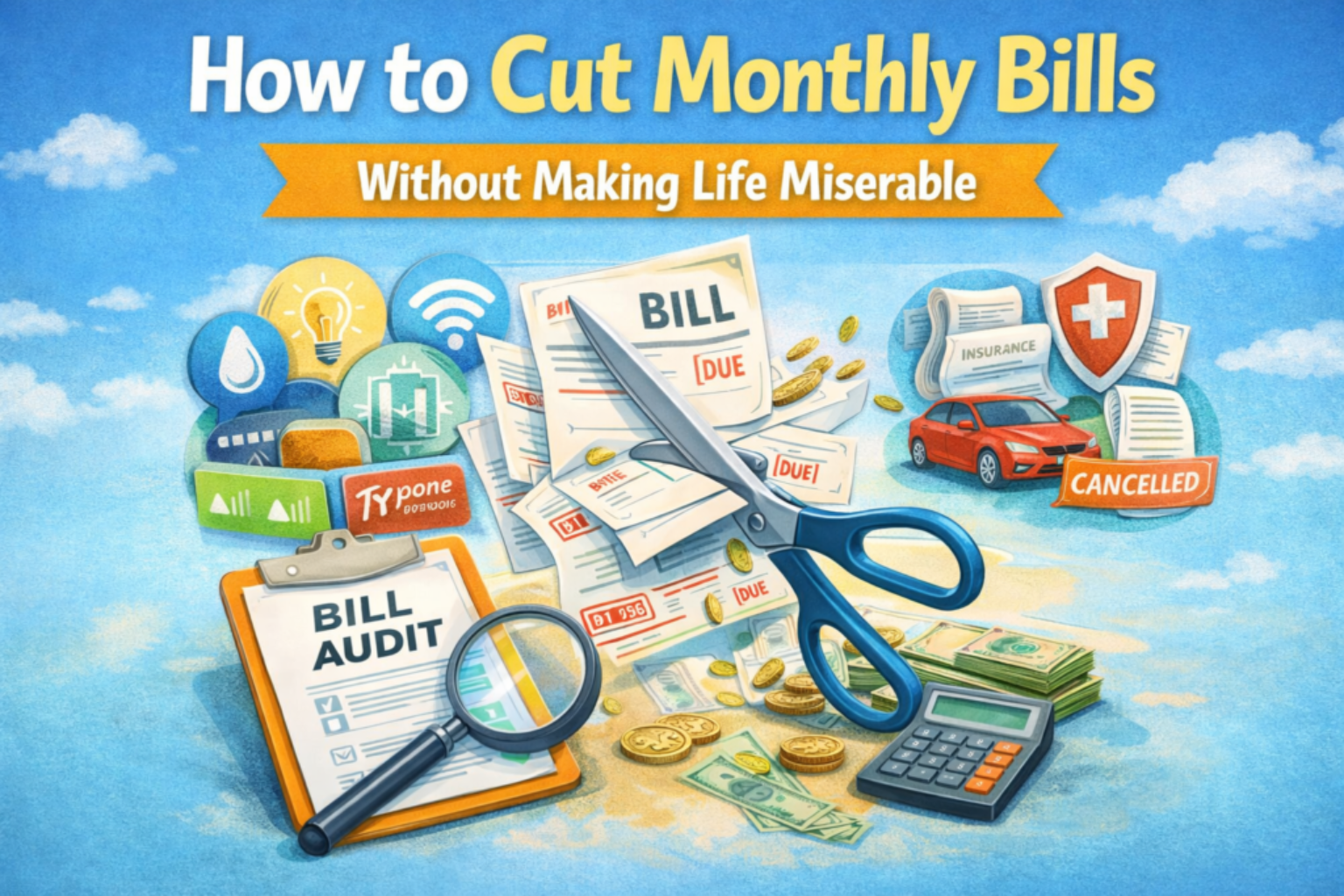
Step 1: Do a 30-minute bill audit
Go through the last 2 to 3 months of:
- checking-account transactions
- credit-card statements
- autopay confirmations
- subscription emails
Mark every recurring charge as one of three things:
- Essential and reasonable
- Essential but too expensive
- Nonessential or rarely used
This is the cleanest way to spot real savings opportunities without guessing. The CFPB’s budgeting guidance emphasizes looking at actual account history and comparing your real monthly spending with take-home pay.
Step 2: Cut the easiest bills first
The easiest bills to lower are usually the ones that do not affect your core quality of life much when reduced. Examples:
- unused subscriptions
- duplicate streaming services
- premium app plans
- extra phone data you do not use
- convenience memberships you forgot about
These are good targets because they usually involve low effort and immediate savings. You are not changing where you live or whether your car is insured. You are simply stopping waste.
Step 3: Rework utility bills instead of just “using less”
Utilities are one of the biggest areas where small changes can compound. The CFPB says utilities can be a significant part of a monthly budget, and the Department of Energy says reducing energy use at home can lower utility bills and put money back in your pocket.
The DOE’s Energy Saver guidance highlights practical actions like:
- using programmable thermostats
- reducing wasted heating and cooling
- insulating and sealing leaks
- using efficient appliances and lighting
These changes can reduce monthly utility costs over time.
For a low-stress approach, start with:
- thermostat adjustments you can tolerate
- filter replacement and routine HVAC maintenance
- unplugging or switching off unused electronics
- weatherstripping obvious leaks
- running appliances more efficiently
The goal is not discomfort. The goal is to stop paying for avoidable waste.
Step 4: Review internet and phone plans
Internet and phone bills are classic “set it and forget it” expenses that often drift upward. The FCC’s National Broadband Map lets consumers enter an address and see which providers can serve that location, along with technologies and speeds offered. That makes it easier to compare what is available before accepting the first renewal price your current provider gives you.
A realistic way to cut these bills:
- check whether your current speed tier is more than you need
- compare providers at your address
- see whether a lower-cost plan still fits your household
- review whether you are paying for lines, devices, or add-ons you barely use
You do not need to become an expert negotiator. In many cases, simply knowing what competing plans exist is enough to make a better decision.
Step 5: Shop insurance before renewal
Insurance is often one of the largest recurring expenses outside housing. The easiest mistake is letting it renew automatically year after year without checking whether the coverage or price still makes sense.
A practical rule:
- review auto, renters, or homeowners insurance before renewal
- compare the premium, deductible, and coverage details
- make sure you are not overinsuring small risks or carrying optional add-ons you do not value
This step takes more effort than canceling a subscription, but the savings can be much larger.
Step 6: Do not ignore “less frequent” bills
One reason monthly budgets feel tight is that people focus only on bills that hit every month and ignore the ones that show up quarterly, annually, or seasonally. The CFPB specifically warns people not to miss less-frequent expenses like insurance payments, medical costs, seasonal spending, school clothes, gifts, and vacations when assessing spending.
This means some of the best “monthly bill” savings actually come from:
- spreading annual expenses into monthly sinking funds
- stopping surprise charges from wrecking one month
- making recurring savings transfers for future bills
That does not reduce the total bill directly, but it reduces the monthly stress that makes the budget feel out of control.
Step 7: Keep the cuts you can live with
The biggest mistake people make is cutting bills in ways they hate. If the savings method makes daily life miserable, it usually does not last.
A better filter is:
- does this save money every month?
- does it protect essentials?
- can I keep doing this for a year?
If the answer is yes, it is a good cut.
That is why sustainable examples work better:
- one or two fewer subscriptions, not zero entertainment
- a lower internet tier that still works, not unusable service
- smarter thermostat settings, not freezing or overheating
- better insurance shopping, not reckless undercoverage
A simple priority order for cutting monthly bills
Use this order:
- Unused or low-value subscriptions
- Phone and internet plan mismatches
- Energy waste and utility inefficiency
- Insurance review and comparison
- Recurring “small leaks” in the budget
- Less-frequent bills that should be planned monthly
This order works because it starts with easy wins and moves toward higher-effort, higher-impact savings.
Final answer: how to cut monthly bills without making life miserable
The best way to cut monthly bills is to:
- audit your real recurring expenses
- cancel what you do not use
- update overpriced service plans
- reduce utility waste
- compare internet and insurance options
- plan for less-frequent costs before they become budget shocks
The CFPB’s budgeting guidance shows why this works: the right budget reflects actual spending, including utilities, insurance, maintenance, and less-frequent costs. DOE guidance shows that energy-saving improvements can reduce utility bills, and FCC tools can help you compare broadband options more clearly.
You do not need to cut everything. You need to cut the bills that are no longer earning their place in your budget.
FAQ
What is the easiest monthly bill to cut first?
Usually subscriptions and recurring memberships, because they are often easy to cancel and do not affect essential needs.
How can I lower my utility bill without major upgrades?
The DOE says simple actions like thermostat management, reducing energy waste, and improving home efficiency can lower bills over time.
How do I compare internet providers near me?
The FCC’s National Broadband Map lets you search by address and see providers, technologies, and speeds offered at that location.
Why does my budget still feel tight even after cutting a few bills?
Often because less-frequent expenses like insurance, gifts, medical costs, and seasonal spending were never built into the budget in the first place. The CFPB specifically tells people to include those when assessing spending.
Should I cut bills or save more?
Usually both. Lowering recurring bills creates room to save more consistently for emergencies and future goals.