What Is a Sinking Fund and Which Ones Does Your Household Actually Need?
A sinking fund is money you set aside little by little for a bill you know is coming later. It is not an emergency fund, and it is not your regular monthly spending money. It is a planning tool for expenses that are predictable but irregular. While the CFPB materials I’m citing here do not use the phrase “sinking fund” directly, the concept lines up with its advice to budget for known but non-monthly costs and to separate those from true emergencies.
That difference matters. The CFPB defines an emergency fund as cash set aside for unplanned expenses or financial emergencies like car repairs, home repairs, medical bills, or loss of income. A sinking fund is for the opposite kind of expense: something you can reasonably see coming, even if it does not happen every month.
What is a sinking fund?
A good simple definition is this:
A sinking fund is planned savings for a specific future expense.
You choose the expense, estimate the amount, decide when you will need the money, and save toward it over time. This is the same basic logic the CFPB uses when it tells homebuyers to budget for taxes, insurance, maintenance, utilities, moving costs, and other changed expenses instead of being surprised later.
So if you know you will need $600 for car tires in 6 months, you do not wait until the bill arrives. You save about $100 a month. That is a sinking fund.
Sinking fund vs emergency fund
This is the most important distinction in the article.
A sinking fund is for:
- expected expenses
- irregular but predictable bills
- planned future spending
An emergency fund is for:
- unexpected expenses
- financial shocks
- sudden income loss or urgent repairs
The CFPB’s emergency-fund guide is clear that emergency savings is for unplanned expenses, not routine monthly spending. That is why sinking funds are useful: they keep predictable expenses from eating into money that should be reserved for real emergencies.
Why sinking funds help so much
Sinking funds make your budget more realistic. Many people think they are “bad at budgeting” when the real issue is that they only plan for monthly bills and ignore irregular ones. CFPB housing guidance specifically warns that people are often surprised by costs like insurance, taxes, maintenance, and utilities, and it encourages budgeting for those changed or irregular expenses ahead of time.
They also reduce the odds that you will need to borrow. The CFPB says that without savings, a financial shock can push people toward credit cards or loans that are harder to pay off. Even though that statement is made about emergencies, the same logic applies to predictable expenses you failed to prepare for. If you know a bill is coming and still have to put it on a card, that is usually a planning problem, not an emergency.
The Federal Reserve’s 2025 household well-being report also shows why having cash set aside matters: in 2024, 69% of adults said they could cover an expense of at least $500 using current savings, and 55% said they had rainy-day funds covering three months of expenses. That still leaves many households financially exposed, which is why organizing savings by purpose can help.
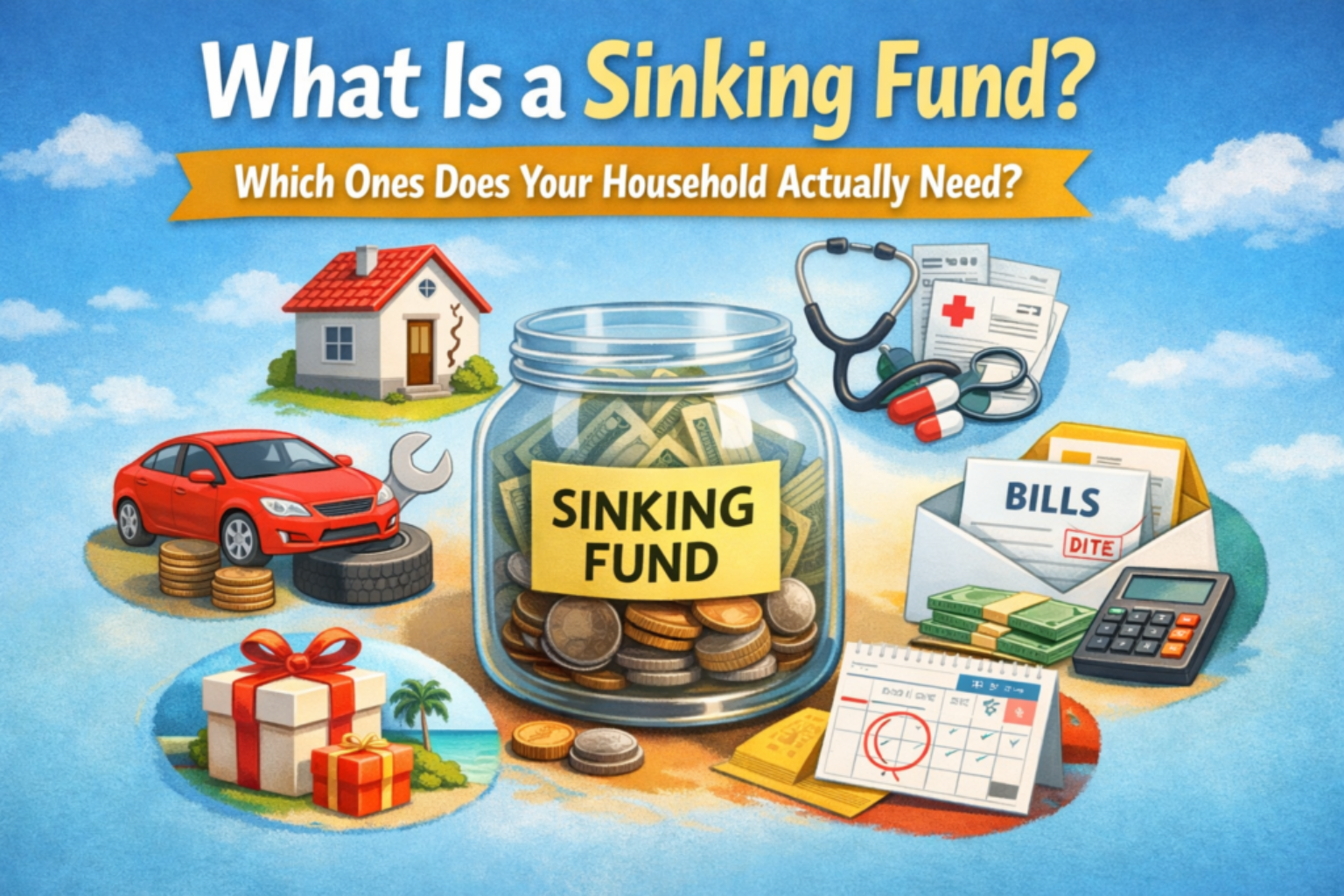
Which sinking funds does your household actually need?
Not every household needs ten different sinking funds. Most people do better starting with three to five of the most likely irregular expenses.
1. Car maintenance and repair fund
This is one of the most practical sinking funds for almost any working household. The CFPB lists car repairs as a common example of an emergency expense. But routine maintenance, tires, registration, and expected wear-and-tear costs are often better treated as sinking-fund items because they are not truly random over the long run.
Use this fund for:
- tires
- brakes
- oil changes
- registration
- non-urgent repairs
2. Home maintenance fund
If you own a home, this is usually essential. The CFPB tells homebuyers to budget for maintenance, repairs, utilities, insurance, and taxes because these costs can be significant and often surprise people.
Use this fund for:
- appliance replacement
- plumbing fixes
- HVAC service
- seasonal maintenance
- small repair projects
3. Annual bills fund
This is one of the most overlooked sinking funds. Some bills do not hit monthly, but they are still very real. The CFPB’s escrow guidance explains that taxes and insurance can otherwise arrive as large expenses once or twice a year, and escrow exists partly to avoid that shock by spreading the cost monthly. A personal sinking fund does the same thing for bills you handle yourself.
Use this fund for:
- insurance premiums
- property taxes if not escrowed
- memberships
- annual subscriptions
- license renewals
4. Medical out-of-pocket fund
The CFPB includes medical bills among common emergency expenses. But many households also face predictable healthcare costs that are not exactly “emergencies,” such as deductibles, prescriptions, glasses, specialist visits, or recurring treatment costs. If those happen often enough in your household, they deserve their own sinking fund.
5. Holiday and gift fund
This is a classic sinking fund because holidays are not surprises. Birthdays, family gatherings, and year-end shopping happen on a schedule, even if the total cost changes from year to year. A holiday sinking fund prevents predictable seasonal spending from wrecking November and December.
6. Travel or vacation fund
This one is optional, but very useful if you value travel. A vacation is the perfect example of a non-emergency goal that should be funded in advance instead of financed later.
7. Kids and school costs fund
For families, this can be one of the most important categories. School supplies, activity fees, uniforms, seasonal clothing, and class events may not be monthly, but they are very real recurring costs.
8. Pet care fund
If you have pets, irregular but likely costs such as vaccinations, grooming, medications, or non-urgent vet visits can fit well here.
Which sinking funds should you start with first?
Start with the ones most likely to hit your household in the next 6 to 12 months.
For most households, the best first three are:
- Car
- Annual bills
- Home maintenance or medical out-of-pocket
For families, a strong starter set might be:
- Car
- Kids/school
- Holidays
- Medical
- Annual bills
The goal is not to create a complicated system. The goal is to stop getting blindsided by bills that were actually predictable.
How to calculate a sinking fund
The formula is simple:
Total expected cost ÷ number of months until you need it = monthly sinking-fund amount
Examples:
- $600 tires in 6 months = $100/month
- $1,200 holiday budget in 12 months = $100/month
- $900 annual insurance premium in 9 months = $100/month
That is all a sinking fund really is: taking a large future cost and breaking it into small monthly steps.
Where should you keep sinking-fund money?
For most people, a savings account works well. The CFPB says savings accounts are best for emergencies and infrequent purchases, which makes them a practical fit for sinking funds too. You do not usually want this money sitting in checking where it can be spent casually.
You can organize sinking funds in one of three ways:
- one savings account with a spreadsheet or app tracking each category
- separate savings accounts for major goals
- a hybrid system with one main savings account and a few large-category subaccounts
The simplest system is usually the best one.
How many sinking funds are too many?
If you have so many sinking funds that you cannot keep track of them, you probably have too many. Start small. A good rule is:
- begin with 3 to 5
- add more only when the first few are working
- combine tiny categories if needed
For example, instead of separate funds for gifts, holidays, and birthdays, you could use one Seasonal Spending fund.
Final answer: what is a sinking fund, and which ones do you need?
A sinking fund is planned savings for a known future expense. It helps you prepare for irregular costs before they hit your budget. The CFPB’s guidance strongly supports the idea behind sinking funds by separating true emergencies from expected expenses and encouraging people to budget for large, irregular costs like maintenance, taxes, and insurance ahead of time.
For most households, the sinking funds that matter most are:
- car costs
- annual bills
- home maintenance
- medical out-of-pocket costs
- holidays or school costs, depending on your household
You do not need a perfect system. You need a realistic one that keeps predictable expenses from turning into budget disasters.
FAQ
What is a sinking fund in simple terms?
It is money you save gradually for a bill or expense you know is coming later.
Is a sinking fund the same as an emergency fund?
No. A sinking fund is for expected expenses. An emergency fund is for unplanned expenses and financial shocks. The CFPB defines emergency savings as money set aside for unplanned expenses or emergencies.
What sinking funds should a household have?
Most households should start with car costs, annual bills, and either home maintenance or medical expenses. Families may also want school and holiday funds.
Where should I keep a sinking fund?
Usually in a savings account, not in your daily checking account. The CFPB says savings accounts are suited for emergencies and infrequent purchases rather than regular daily transactions.
How many sinking funds should I have?
Start with 3 to 5. Add more only if the system stays easy to manage.