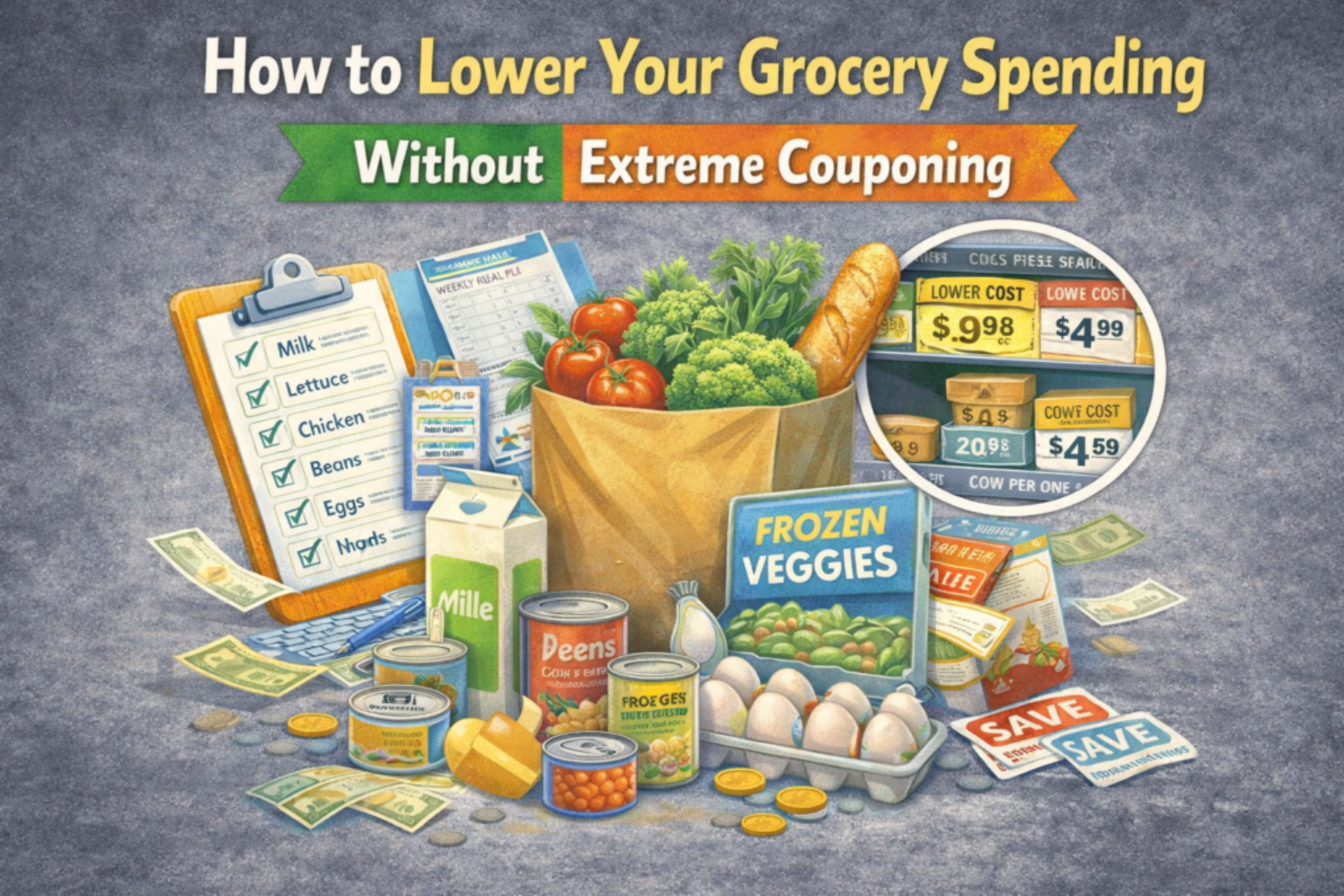
How to Lower Your Grocery Spending Without Extreme Couponing
If you want to know how to lower grocery spending without turning shopping into a second job, the good news is that you do not need extreme couponing to make real progress. USDA budget-shopping guidance emphasizes a simpler formula: plan before you shop, compare prices, and prepare food in ways that stretch ingredients further. Grocery costs have also remained a real pressure point for households; BLS reported that food-at-home prices rose 2.2% over the year in May 2025, while food-away-from-home prices rose even faster at 3.8%.
That means the biggest wins usually come from everyday habits, not heroic effort. The best grocery-saving strategies are the ones you can repeat every week: meal planning, checking what you already have, comparing unit prices, using lower-cost alternatives, and cutting waste. USDA and MyPlate both recommend exactly those kinds of steps for households trying to eat well on a budget.
Start with a grocery plan before you shop
The cheapest grocery trip usually starts before you leave the house. MyPlate’s budget guidance says to check your freezer, refrigerator, and cabinets first, then write out meals for the week and build your list around what you already have. That reduces duplicate purchases and helps prevent food from spoiling before you use it.
A simple grocery plan looks like this:
- check what is already in your kitchen
- decide 4 to 6 meals for the week
- write a short shopping list based on those meals
- include snacks, breakfast, and staples you are actually running low on
This works because it shifts you from “shopping for possibilities” to “shopping for a plan.” USDA specifically recommends planning meals, using a grocery list, and preparing meals in advance to stretch food dollars further.
Compare unit prices, not just sticker prices
One of the easiest ways to overspend is to buy based on package price instead of actual value. USDA’s budget-shopping advice says to compare unit prices on shelf labels to figure out which size or brand is really the better deal. WIC Works’ Spend Smart. Eat Smart. resources also highlight unit pricing as a core grocery-saving skill.
This matters because:
- a larger package is not always cheaper per ounce
- “sale” labels do not always mean best value
- brand-name and store-brand price differences can be misleading unless you compare equal sizes
Unit pricing is one of the best grocery habits because it saves money without requiring you to give up foods you already buy.
Use store brands for the right categories
You do not need to switch everything at once. Start with categories where brand loyalty matters least:
- canned goods
- pasta and rice
- frozen vegetables
- oats
- flour and sugar
- dairy basics
- pantry staples
USDA’s budget guidance focuses on comparison shopping and choosing lower-cost options that still meet your needs, which is exactly where store brands help most. They are often one of the cleanest ways to lower grocery costs without changing your diet much.
Buy produce strategically, not perfectly
People often assume saving money on groceries means buying less produce. USDA guidance suggests the opposite approach: plan around seasonal produce, buy budget-friendly staples like potatoes, onions, and apples, and use frozen or canned options when fresh is too expensive or likely to spoil. USDA also notes that frozen and canned produce can be strong budget alternatives when you need foods that last longer.
That means a more practical produce strategy is:
- buy seasonal fresh produce when prices are better
- use frozen vegetables for convenience and less waste
- keep some canned items for shelf-stable backup
- avoid buying aspirational produce you are unlikely to cook
This lowers your grocery bill partly by lowering food waste.
Build meals around lower-cost ingredients
USDA recommends meals like soups, salads, stews, and stir-fries because they help stretch more expensive ingredients into more portions. That is one of the easiest ways to reduce grocery spending without feeling deprived.
Good low-cost meal bases include:
- rice
- beans
- pasta
- potatoes
- oats
- eggs
- frozen vegetables
- lentils
- soups and casseroles
You do not need to eliminate pricier foods. You just use them more strategically. For example, meat can be one part of the meal instead of the entire center of it.
Shop with a list and do not shop hungry
This sounds basic because it works. USDA explicitly recommends bringing a grocery list and shopping when you are not hungry and not too rushed, because that helps reduce impulse buying and convenience-food spending.
Impulse purchases are often where grocery budgets quietly get blown up:
- grab-and-go snacks
- bakery add-ons
- extra drinks
- promotional displays
- duplicate pantry items you forgot you had
A short list is not restrictive. It is protective.
Reduce waste before trying to cut more
One of the cheapest changes you can make is using more of what you already buy. USDA’s healthy-eating-on-a-budget guidance recommends doubling recipes, freezing leftovers, and repurposing meals, such as turning one cooked protein into multiple dishes later in the week.
A few easy examples:
- roast chicken becomes soup, sandwiches, or quesadillas
- rice becomes stir-fry or fried rice later
- extra vegetables go into omelets, soup, or pasta sauce
- bread nearing the end becomes toast, sandwiches, or croutons
Lower grocery spending is often less about buying radically different food and more about letting less food go bad.
Use bulk buying carefully
Bulk buying can save money, but only when the product is something your household will actually use before it expires. USDA notes that some bulk fruits and vegetables and pantry staples can save money if you know you can use them in time.
Bulk buying makes sense for:
- rice
- oats
- pasta
- dry beans
- flour
- frozen items you use regularly
- produce with a longer shelf life
Bulk buying is not automatically smart if it leads to waste. The best deal is not the biggest package. It is the cheapest amount you will truly use.
Focus on the highest-impact grocery habits
If you want the fastest results, work on these first:
- meal plan before shopping
- check what you already have
- use a list
- compare unit prices
- switch some staples to store brands
- use seasonal, frozen, or canned produce
- cook enough for leftovers
These habits line up closely with USDA’s “plan, compare, prepare” model for eating well on a budget.
Final answer: how to lower grocery spending
The best way to lower grocery spending without extreme couponing is to make shopping more intentional, not more exhausting. USDA’s guidance points to the same practical habits again and again: plan meals, shop with a list, compare unit prices, choose lower-cost alternatives, and prepare food in ways that reduce waste. With grocery prices still higher than a year ago according to BLS, these habits matter even more.
You do not need a binder full of coupons. You need a repeatable system:
- plan before you shop
- buy what you will actually use
- compare value, not marketing
- waste less food
- repeat next week
That is usually enough to make a visible difference in your monthly grocery bill.
FAQ
What is the easiest way to lower grocery spending?
Meal planning and shopping with a list are usually the easiest starting points. USDA and MyPlate both recommend planning meals before going to the store.
Do I need to use coupons to save on groceries?
No. USDA’s budget guidance emphasizes planning, comparing prices, and preparing meals efficiently rather than relying on extreme couponing.
Are frozen vegetables cheaper than fresh?
Often, yes, especially when fresh produce is out of season or likely to spoil. USDA says frozen and canned produce can be budget-friendly alternatives.
Does shopping hungry really make a difference?
Yes. USDA specifically recommends not shopping when hungry because it can increase impulse buying and convenience-food purchases.
What groceries are best to buy in bulk?
Staples you use consistently, like rice, oats, pasta, and some longer-lasting produce. USDA notes that bulk buying can save money when you know you will use the food before it spoils.